Biography
Marc Rudin was born on 29 September 1945, and spent his childhood with his parents and two sisters in Berne. Since his mother is from Western Switzerland, he grew up bilingual.
Marc was passionate about sports from a young age and engaged in athletics, ski racing and climbing in the Ostermundigen quarries.
His talent for drawing and music became apparent at an early age. As a young boy, he often ventured out alone and sketched the landscape of the surrounding area. It is therefore only natural that he later chose to become a professional graphic designer. In 1962 he attended the preliminary course at the School of Arts and Crafts and in 1963 he began an apprenticeship as a graphic artist with J. Mauerhofer in Ostermundigen, Berne. At the Berne School of Applied Arts he was strongly influenced by Hans Schwarzenbach. After successfully completing his apprenticeship, he worked briefly as a graphic designer at Scintilla in 1967/68, then at the Kurt Wirth studio, at Hablützel and Jaquet, and subsequently became a designer for the fashion magazine Harper's Bazar and designed posters for the cable car enterprise Firstbahn as well as the SBB. In 1967 he married and his daughter was born.
During the 60's Marc became a member of the forum “Politicum Bern” and later of the RSB (“Revolutionary Socialist Movement”). On 22 June 1968, he participated in hoisting the flag of the “National Front for the Liberation of South Vietnam” on the top of the Berne Cathedral Tower.
In the fall of 1969, the family moved to Paris and he worked at the Reiwald advertising agency. Politically and artistically, Marc became involved with the French Maoist political party “Gauche Prolétarienne” and in the activist workers' committee “Comité de Lutte” at Renault. He maintained contacts with the North African immigrants who worked in car production and identified with the anti-colonialist struggles and with the liberation struggle of the Palestinians.
In 1972 Marc separated from his wife and returned to Berne, where he became involved in the “Schinagu d'Sach fürs Vouk”. In May 1973 he participated in a squatter house-occupation action in Berne on Forstweg.
In 1974, he became involved in the strike at the Burger & Jacobi piano factory in Biel and in the workers' committee “Ça ira”, “Sich nid lo tschaupe” (Don't get kicked).
After the disbandment of the “Schinagu”, Marc devoted himself to folk music, playing in various groups and building musical instruments himself based on old models. He could often be found in the “Café des Pyrénées” playing chess.
In Milan (1975/76) he participated in the realization of graffiti on squatted houses in the “Porta Ticinese” neighborhood and established his first direct contacts with Palestinians. In 1976 he travelled to Lebanon for a short stay and realized his first posters for the Palestinian resistance.
Back in Switzerland, Marc played old and new forms of folk music in various group formations, including with “Husmusig Jeremias”, and went on tour in Germany with the “Schränzern” as a street musician.
In May 1980, Marc was sentenced to four years in prison in absentia by the “District Court of Saane Fribourg” for his involvement in the bombing attack of November 1979 against the IMEF bank in Fribourg.

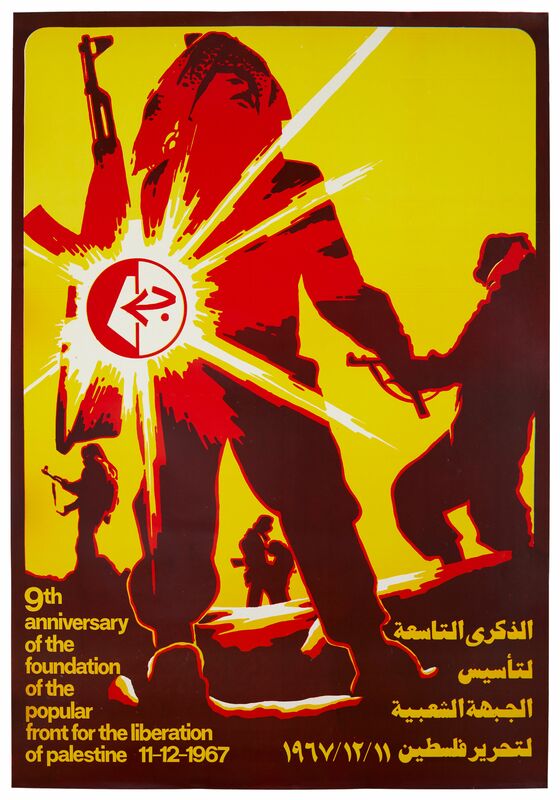
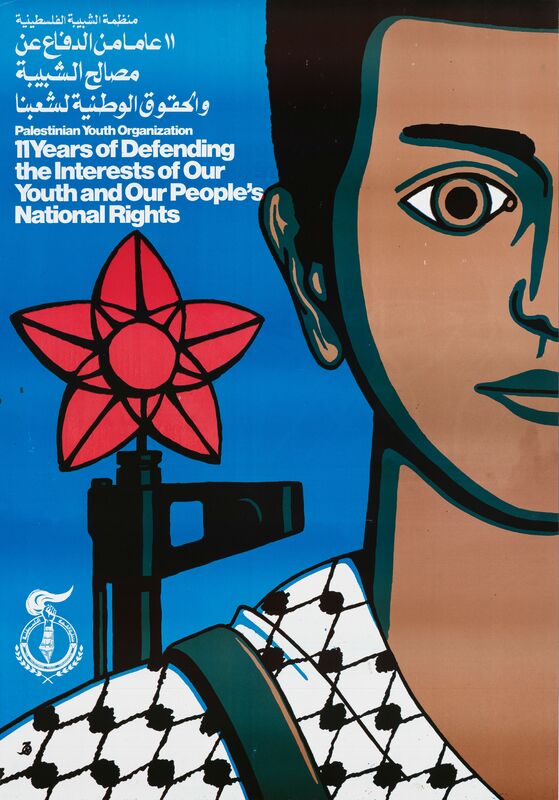
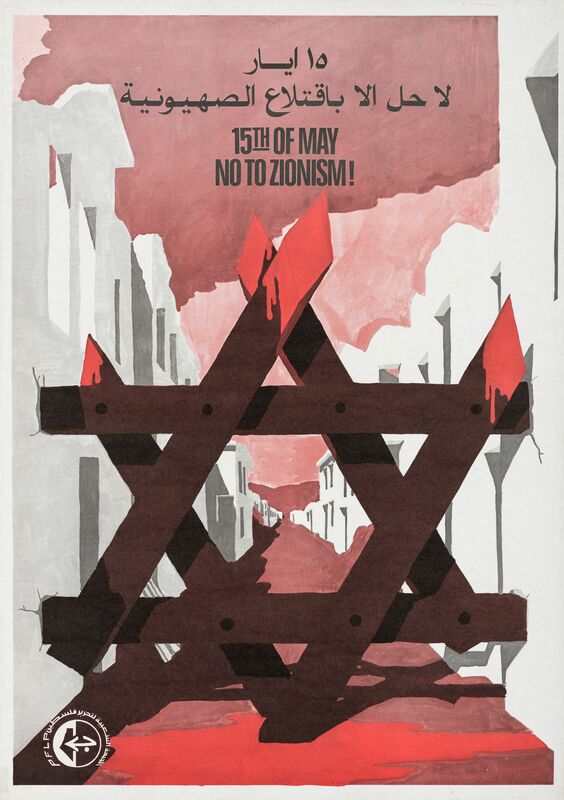
In exile in Beirut and Damascus from 1979 to 1991, Marc worked as a poster designer for the PFLP (“Popular Front for the Liberation of Palestine”) under the name “Jihad Mansour”. During the 1982 invasion of Lebanon by the Israeli army, he participated in the defensive battles of the Palestinian resistance in Beirut. After the unsuccessful defense of Beirut, the fighters were evacuated to Damascus under international supervision.

In 1991, as the situation for illegals in Damascus became increasingly uncertain, Marc attempted to seek refuge in Turkey, was arrested at the border and transferred to Bayrampaşa Prison in Istanbul. Interpol identified Marc as one of the possible participants in the November 1988 robbery by the “Blekingegade Gang” in Copenhagen in which a young policeman lost his life. In 1992 Marc was extradited to Denmark, where he was sentenced to eight years in prison in October 1993 for robbery in support of the Palestinian resistance.
In the security wing of the prison in Horsens, Marc spent his imprisonment realizing drawings, linocuts and woodcuts and kept up a very extensive correspondence. To keep himself physically fit, he pursued an intensive sports program.
In June 1996, he married his longtime love Laura, who was thus finally able to visit him in prison.
In early 1997, Marc was transferred to Fribourg, Switzerland, where he was to be tried again for the bombing attack on the IMEF bank. Due to procedural errors, he was released from prison already in February.
In the summer of 1997, Marc realized a mural together with Colby Blumer in Quartierhof 5 in the Lorraine area in Berne. From then on, Marc lived in Zurich and worked as a vocational school teacher at the “Berufsschule für Gestaltung Zürich Medien Form Farbe” from 1997 until his retirement in 2011. He taught type history, typography and color theory with dedication and competence. Marc also dedicated himself privately to typography and developed several typefaces.
In the folk music group “Nahdisnah”, which he founded, he played cello and viola da gamba. Marc was politically active for years in the Labor Day organizing committee, “1. Mai Komitee Zürich” and in the PdA (Party of Labor) and designed various posters. He frequently travelled to Paris in order to spend time with his daughter and grandchildren. Diagnosed with Parkinson's in 2012, he fought it by jogging, swimming and climbing, and continued to make music and cultivating typefaces.
The disease increasingly limited his range of activity, and from 2020 onwards he was capable of doing very little. Parkinson's sapped his strength and also caused him severe back pain. From August 2021 he lived in the Limmat Health Center, where he was released from his suffering on April 7, 2023.
Text By: Marc Rudin Archive