Mohamed Temmam (Mohamed Temam) was born on the 23rd of February, 1915 (Hijri: 9 Rabi‘ II, 1333) in the Casbah of Algiers. He grew up in a neighborhood called Sidi M’hamed Cherif where his neighbors included a number of artisans and artists, among them the brothers Mohamed and Omar Racim who would continue to inspire and support Temmam’s artistic development throughout his career. The young Temmam attended École Sarrouy, a so-called “native” primary school (école indigène) established by the colonial authorities—later repurposed by the French military as an interrogation and torture center during the Algerian Revolution.

As a teenager, Temmam excelled in the visual arts. He trained in a traditional ceramics workshop led by the French ceramicist Ernest Soupireau, which was associated with the Service des Arts Indigènes, a French institution established to “revive” Algerian artisanal crafts—or at least those deemed palatable or authentic enough to the colonial administration. He also trained with Algerian artists, notably Omar Racim. Shortly after being released from the infamous Barberousse prison in 1921, Racim established an Islamic art school in the Casbah, where Temmam learned to practice miniature painting, calligraphy, and illumination. There he would also meet a number of his longtime artistic colleagues, such as Mostefa Ben Debbagh, Ali Khodja, Boutaleb Mahieddine, M’hamed Haminoumna, and others.
At the age of 16, Temmam entered the École des Beaux-Arts of Algiers in 1931, where he followed his dual interests in classical Islamic arts and European academic painting. In 1936, he received a prestigious scholarship from the Governor General of French Algeria to attend the École nationale supérieure des Arts Décoratifs in Paris, a city where he would eventually spend nearly 30 years. He returned to Algiers briefly in 1937 to organize an exhibition—his first—attesting to his early interest in developing a curatorial practice alongside his artistic practice.
When he returned to Paris the same year, he met his lifelong companion, the Kabyle singer Bahia Farah. Temmam, who avidly attended Maghrebi orchestra concerts in Paris, was also a musician himself, classically trained in Andalusian-style violin and lute which he continued to play throughout his life.
When World War II broke out in 1939, Temmam fought in the French Army as a corporal before being captured in German-occupied northeastern France. He was held as a prisoner of war from 1940 until 1943. Not much is known about his time in the internment camp, but he did find ways to continue creating art, painting portraits of officers and their wives and transforming the makeshift prayer room made by fellow Muslim prisoners with his calligraphy. Even there he made a name for himself; it’s rumored that Marshal Petain, who was the head of the collaborationist Vichy government, wrote a letter addressed to Temmam’s prisoner number at the camp to recognize his talent.

After his release, Temmam worked at the Sèvres porcelain factory, where he contributed to official French state commissions, while continuing to produce his own work and exhibiting in both Algeria and Europe, including one group show organized by Mohamed Racim in Scandinavia in 1946. After the Setif and Guelma massacres in 1945, he left his position at Sèvres and became more involved with the immigrant and exile community. Like many other Algerians living in Paris, he frequented El Djazair, a cabaret in Quartier Latin with a neo-Moorish interior whose stucco he carved, and where he, Bahia Farah, and their friends sometimes performed musical acts.

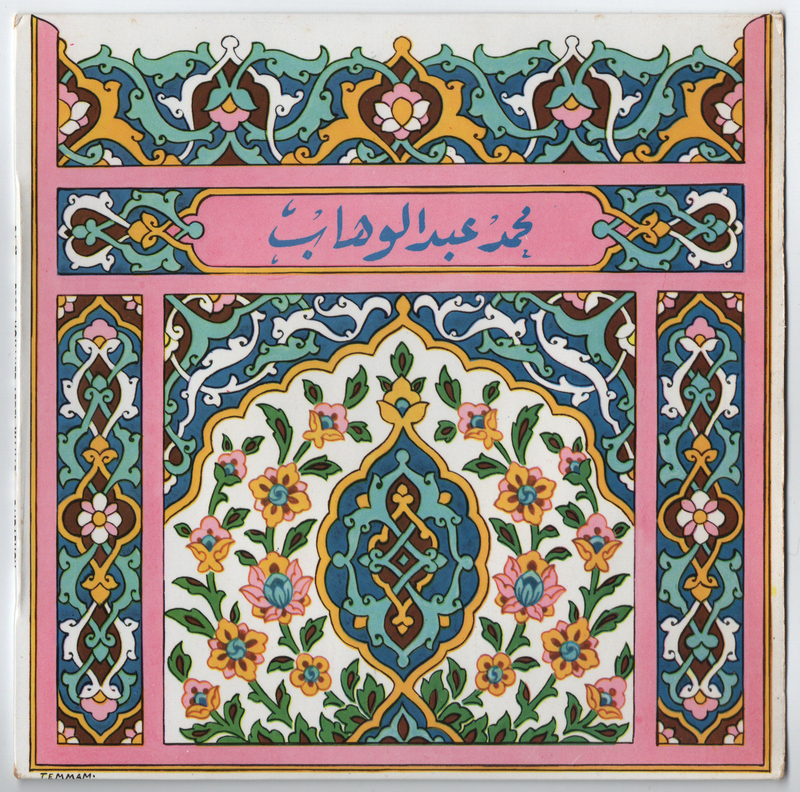
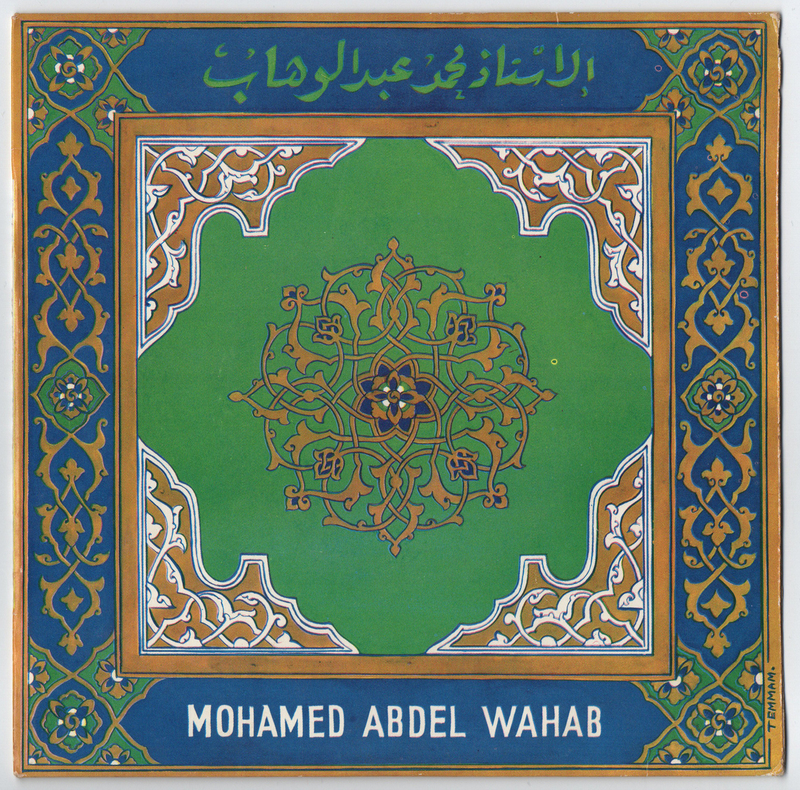
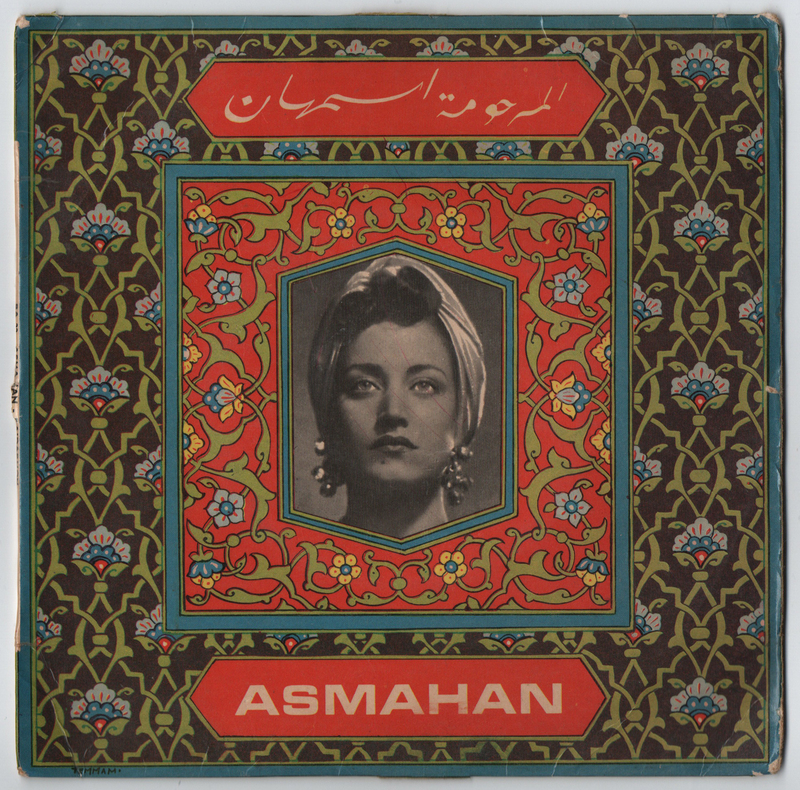
During the Algerian Revolution from 1954-1962, Temmam remained active within the resistance networks operating from France. Together with his companion Bahia Farah, who organized a musical group as part of the FLN Artistic Troupe, they contributed their skills to promote the cause of Algerian liberation abroad. During this time, Temmam also designed graphic art for vinyl record sleeves and other visual material for North African artists like Mohamed Abdelwahab, Asmahan, and others.
After 1962, he returned to Algeria together with Farah and became deeply involved in the state-led cultural initiatives of the newly independent nation. He was a founding member of the national artists’ union UNAP established in 1967 and taught as a professor at the Ecole des Beaux Arts. He served as the director of the National Museum of Antiquities and Islamic Art for 25 years, from 1963 until his death. The museum, which has a permanent gallery named in his honor, still holds much of his work in its collections, attesting to the diversity of his skills with artworks in mediums that range from calligraphic works on paper, miniature paintings, painted wooden chests, ceramic tiles, and oil paintings.

Over the course of his career, Temmam—who became known affectionately as Sid ‘Ali—contributed designs for more than 75 postage stamps as well as dinar coins, contributing to the visual identity of a newly sovereign Algerian state.
Many assume that Temmam's works took on a political slant only after independence, when he became known for blending European academic painting techniques of perspective, modelling, and portraiture into an Islamic miniature tradition to envision scenes of Algerian life free of colonial imagery. But the art historian Anissa Bouayed has shown that Temmam's political awareness started much earlier, when he was a student of Omar Racim, an artist known also for his nationalist writings. At only 18 years old, Temmam reinterpreted a 19th-century French painting by Ange Tissier of a meeting between Napoleon and the Algerian resistance leader Emir Abdelkader. Temmam’s version places both figures on equal footing, he removes the figure of the Emir’s mother kneeling before the emperor, and recontextualizes the scene to take place in an Ottoman Algerian interior rather than a French chateau—transforming the image into one of visual resistance.
In 1984, Bahia Farah succumbed to illness, a loss from which Temmam would never fully recover. He died four years later on July 15th, 1988, in Algiers, leaving behind a legacy as a dedicated and deeply talented artist who worked across many different media and modes of art making, as a painter, illuminator, calligrapher, graphic designer, ceramicist, curator, and musician.
Text By: Ava Katarina Tabatabai Hess

Ava Hess is an Iranian-American curator and PhD Candidate in Art History at the University of California Los Angeles (UCLA). She is currently based in Tunisia where she is researching under-glass painting, printmaking, and figural Islamic art in the Maghrib for her dissertation.